
Cancer and Exercise
Why resistance training can be helpful during treatment?
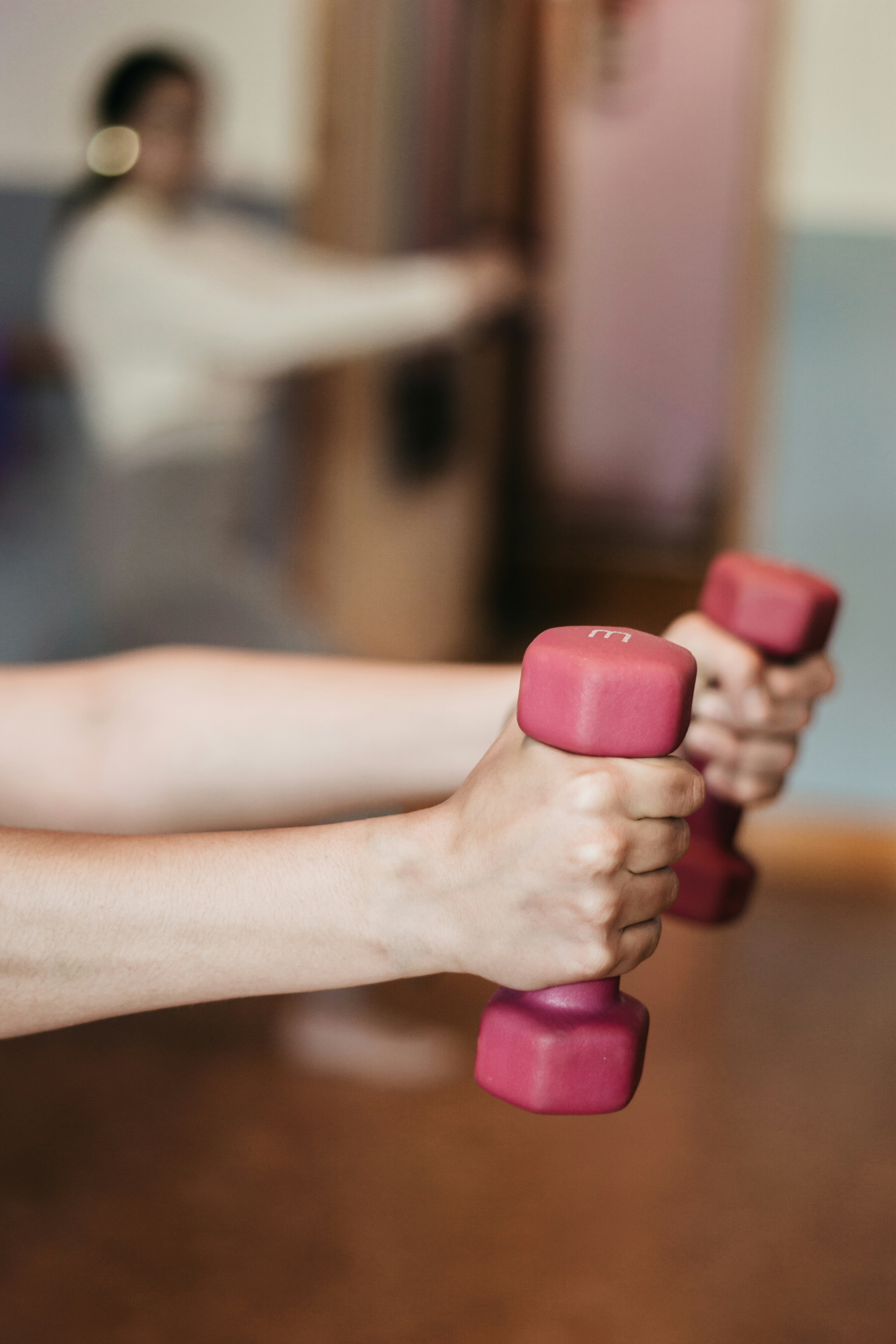
Resistance training is now commonly seen across all people of all ages, more so than ever before. The research demonstrates clear benefits to a person's physical and mental health. Ranging from your ability to move and move well late in your life to building and maintaining muscle mass, muscular strength, improving body composition, aiding in cellular metabolism, improving blood glucose control, and better resilience to depression and anxiety.
But should you be including resistance exercise as a part of your cancer treatment, or should you wait until your treatment has finished? Let’s explore.
What is resistance exercise?
The definition of resistance exercise is any exercise that requires physical exertion and is designed to improve muscular strength and endurance by making your muscles work against an external force.
Most people, when they think of resistance exercise, will think of a gym environment, and that is still the most common place to do it. To get the desired muscular adaptation, you need a big enough resistance to cause the muscle to work hard and cause it a little bit of stress; your muscles will then recover and become stronger, bigger, or have better work capacity than before.
Not all resistance activities belong in the gym, and many of the activities we do in our day-to-day life involve strength: carrying the shopping in from the car, opening an old window or garage door, lifting children or grandchildren. Depending on your starting point, you may find that activities that are part of daily living are enough to elicit early muscular strength adaptation.
Why do we lose muscle during cancer treatment?
There are several reasons that mean we are more prone to losing muscle mass during treatment. Increased levels of fatigue, decreased energy levels, nausea, and many people will move less and eat less. As you experience these side effects, sometimes just getting out of bed feels like an achievement. Muscle is an expensive tissue for the body to keep because it needs a lot of energy to maintain. You may have heard the phrase “use it or lose it,” and this is effectively what happens. As you use your muscles less, your body treats them as costly and starts to let some go. Combine this with a lower energy intake, and you might not have the building blocks it needs to sustain your muscle.
Treatment and cancer can also affect the muscle directly. Hormone treatment for prostate cancer can reduce lean muscle mass, and some additional medicines such as steroids that come with cancer treatment may contribute as well. If you are struggling with your diet, ask your team about referring you to a dietitian because getting enough protein and energy will be important for you being able to withstand your treatment.
What does the research say?
The strongest evidence comes from trials in which people did supervised exercise whilst having treatment.
Starting in chemotherapy: The START trial, a study from Canada, included 242 women receiving chemotherapy for breast cancer who were randomly assigned to supervised resistance training, supervised aerobic training, or normal care for the length of their treatment. Those who did aerobic and resistance training had better strength and lean body mass than those who on usual care, and in this trial were more likely to complete their planned chemotherapy. The participants in the resistance training did not develop lymphoedema or experience exercise-related adverse events. Fatigue and quality of life scores also moved in a positive direction, although not enough to be statistically significant. Courneya et al., 2007, J Clin Oncol (START trial).
Radiotherapy: The BEST trial, 160 women having radiotherapy for breast cancer either did 12 weeks of progressive resistance training or relaxation sessions twice per week. The group that did the resistance training had less physical fatigue and better scores for function and pain, and almost everyone completed the programme. Not every measure in this trial improved; cognitive fatigue did not differ between the groups. Steindorf et al., 2014.
Hormone therapy for prostate cancer: In a trial of 155 men starting androgen deprivation therapy, 12 weeks of resistance exercise reduced fatigue in daily life and improved quality of life compared with a waiting list group.Segal et al., 2003, J Clin Oncol. In a separate trial, 57 men who had been on hormone therapy for more than two months, a combined programme of resistance exercise and aerobic exercise was reported to reverse the muscle loss caused by the treatment. Galvão et al., 2010, J Clin Oncol.
Pooling the trials: A 2022 review of randomised trials in people with cancer treatment found that resistance exercise reduced fatigue, with a moderate quality of evidence.
These findings are reflected in the guidelines. For example, the American Society of Clinical Oncology recommends regular aerobic and resistance exercise for people having cancer treatment with curative intent (Ligibel et al., 2022), and international guidelines conclude that exercise is generally safe for people with cancer (Campbell et al., 2019).
What the research doesn’t tell us
Although research is strong in some categories, there are limits to what we are able to say.
Resistance training is rarely tested on its own: START, BEST, and a 2003 prostate trial are the exceptions. Most studies combine aerobic and resistance exercise, which means it is hard to separate out the two. Most of the evidence is carried out in breast or prostate cancer: this does not mean that the advice or the benefit can not be applied to other cancers, only that the trials have not been covered yet. Trials are usually supervised, which means these trials can look different from what you might do at home. Results are not uniform: not every trial finds a benefit for fatigue or quality of life. Immunotherapy is largely untested: the evidence here for resistance training is largely untested. Treatment completion and cancer outcomes are unclear: the ASCO guideline panel did not find evidence to say that exercise helps completion rates, recurrence or survival.
Outcomes most frequently measured are fatigue, lean muscle mass, muscle strength, quality of life, and physical function.
What about exercise beyond cancer treatment?
In the CHALLENGE trial, 889 people with colon cancer who had completed chemotherapy were randomly assigned to a supervised exercise group or a health-education alone group. At five years, those in the exercise group were more likely to be free of cancer recurrence or a new cancer than those in the health-education group. (80.3% compared with 73.9%) (Courneya et al., 2025).
The programme began after treatment had ended and focused mainly on aerobic exercise, so this trial can not tell us what happens with resistance exercise during treatment. It shows that exercise can play a meaningful role in cancer care.
Is it safe to do resistance exercise during cancer treatment?
Broadly speaking, yes. The START and BEST trials found the programmes to be safe, and the ACS guidelines describe the risk of adverse events as low. However, I would always recommend that you speak with your cancer care team and let them know you are thinking about starting to exercise.
One of the biggest concerns has been lymphedema; however, the two trials in breast cancer survivors showed that slow, progressive weight lifting did not worsen lymphedema in women who already had it, and resistance training reduced flare-ups and improved strength (Schmitz et al ., 2009). These trials were in survivors, not in those with active treatment, but they challenged long-standing advice to avoid resistance exercise. The women in the 2008 trial wore compression garments while doing resistance training and were monitored for swelling, and there is no evidence that resistance training causes lymphedema.
As always, each person will have different requirements; for example, if cancer has spread t o the bone, some movements may need to be modified. A Clinical Exercise Physiologist will assess you to understand exactly where you are in your treatment.
If you notice a fever, new or unusual pain, dizziness or breathlessness, swelling in an arm or leg, or if you have any concern around a line or port or a recent surgical site, stop and contact your team.
What type of resistance training should I do?
You will find that at different points from diagnosis, during treatment, and into remission and survivorship, your goals will change; that is expected and normal, and as a result, so will the type and intensity of exercise and resistance training you do. I’ll break down each stage below.
Prehabilitation (before treatment): This is the time between diagnosis and the start of your treatment. The aim is to get you fitter and stronger for your treatment ahead. This could consist of resistance exercise and aerobic exercise; the exercises and the intensity chosen will depend on your starting point, training history, and other health conditions. You can read our guide on prehabilitation.→ What is prehab and how can it help me before my surgery
During treatment: This is harder to give an example of, because everyone's treatment schedules are different, and everyone will experience side effects differently. The aim during treatment is to maintain your function, your muscle mass, and your aerobic capacity for as long as possible.
For example, chemotherapy treatment often runs in 3-week cycles, which can mean a bad week, a slightly better week, and a good week. During the bad week, a walk might be the aim; during the slightly better week, a walk and a couple of sit-to-stands throughout the week; and the better week could be a walk, plus sit-to-stands, plus incline press-ups. This is a very simplified illustration: programmes in the research trials mentioned above are usually supervised and more structured. We have more information on why exercise can be helpful during treatment here: → Why is exercise during cancer treatment helpful
Post-treatment: The focus shifts to understanding what life looks like now, and where you want to get to. Goals often change from maintenance to rebuilding strength and fitness, and a Clinical Exercise Physiologist can help set the pace.
Am I safe to do it on my own?
First, speak to your cancer treatment team and tell them you want to exercise during your treatment. They may suggest seeing a Clinical Exercise Physiologist to help guide you and build a programme you can do. Motivation and energy will be very low during treatment, and it might be helpful to outsource some of that motivation to a CEP.
TheHealthNav has a network of AHCS-registered Clinical Exercise Physiologists throughout the UK who can help provide exercise support throughout your treatment. The evidence suggests exercise is generally safe and beneficial for most people during treatment, but your needs will change as treatment goes on, and adapting to them is crucial. Macmillan says that you should finish an exercise energised, not exhausted.
Ready to talk to someone? Tell us about your diagnosis, where you are in treatment, and where you're based. We'll match you with a Clinical Exercise Physiologist who specialises in cancer — AHCS-registered and personally verified by our team.
This article is general information and is not a substitute for advice from your oncology or surgical team. Always speak to them before starting or changing physical activity before treatment.
References
Courneya KS, Segal RJ, Mackey JR, et al. Effects of aerobic and resistance exercise in breast cancer patients receiving adjuvant chemotherapy: a multicenter randomized controlled trial. J Clin Oncol. 2007. (https://doi.org/10.1200/JCO.2006.08.2024)
Steindorf K, Schmidt ME, Klassen O, et al. Randomized, controlled trial of resistance training in breast cancer patients receiving adjuvant radiotherapy: results on cancer-related fatigue and quality of life. Ann Oncol. 2014;25(11):2237-2243. (https://doi.org/10.1093/annonc/mdu374)
Segal RJ, Reid RD, Courneya KS, et al. Resistance exercise in men receiving androgen deprivation therapy for prostate cancer. J Clin Oncol. 2003;21(9):1653-1659. (https://doi.org/10.1200/JCO.2003.09.534)
Galvão DA, Taaffe DR, Spry N, Joseph D, Newton RU. Combined resistance and aerobic exercise program reverses muscle loss in men undergoing androgen suppression therapy for prostate cancer without bone metastases: a randomized controlled trial. J Clin Oncol. 2010;28(2):340-347. (https://doi.org/10.1200/JCO.2009.23.2488)
Berríos-Contreras et al. Effectiveness of resistance training on fatigue in patients undergoing cancer treatment: a meta-analysis of randomized clinical trials. Int J Breast Cancer. 2022;9032534. (https://doi.org/10.1155/2022/9032534)
Schmitz KH, Ahmed RL, Troxel A, et al. Weight lifting in women with breast-cancer-related lymphedema. N Engl J Med. 2009;361(7):664-673. (https://doi.org/10.1056/NEJMoa0810118)
Schmitz KH, Ahmed RL, Troxel AB, et al. Weight lifting for women at risk for breast cancer-related lymphedema: a randomized trial. JAMA. 2010;304(24):2699-2705. (https://doi.org/10.1001/jama.2010.1837)
Courneya KS, Vardy JL, O'Callaghan CJ, et al. Structured exercise after adjuvant chemotherapy for colon cancer. N Engl J Med. 2025;393:13-25. (https://doi.org/10.1056/NEJMoa2502760)
Ligibel JA, Bohlke K, May AM, et al. Exercise, diet, and weight management during cancer treatment: ASCO guideline. J Clin Oncol. 2022;40(22):2491-2507.(https://doi.org/10.1200/JCO.22.00687)
Campbell KL, Winters-Stone KM, Wiskemann J, et al. Exercise guidelines for cancer survivors: consensus state. (https://doi.org/10.1249/MSS.0000000000002116)