
Exercise, prescribed like medicine.
Every practitioner is AHCS-registered and personally verified.Every practitioner personally verified.
What is a clinical exercise physiologist?
Just as a doctor prescribes medication for a specific condition, a clinical exercise physiologist prescribes exercise.
They are healthcare professionals who understand how different health conditions affect the body, and how the right type of exercise can help.
A clinical exercise physiologist works with people managing conditions like heart disease, cancer, diabetes, chronic pain, neurological conditions, and post-surgical recovery. They design exercise programmes based on your clinical history, current health, and what your body can safely do, then supervise and adjust those programmes as you progress.

They are registered with the Academy for Healthcare Science (AHCS), the same body that regulates other allied health professionals in the UK.
They are not personal trainers or fitness instructors.
Who a clinical exercise physiologist can help
These are the three areas where the evidence is strongest and where our practitioners do most of their work, often alongside your existing medical team.
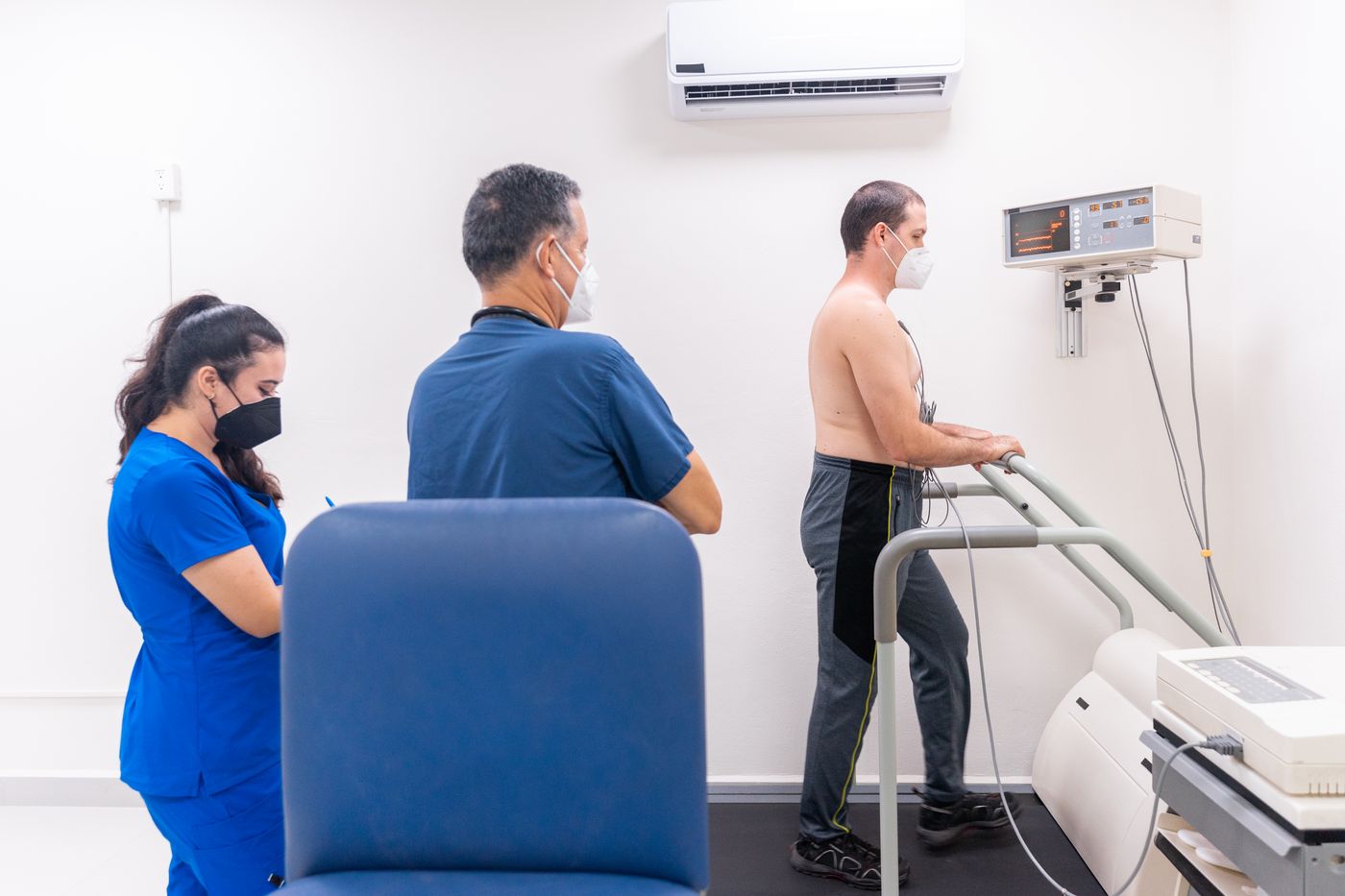
Cardiovascular
- Heart disease & cardiac rehab
- Hypertension
- Heart failure management
- Post-cardiac event recovery

Metabolic
- Type 2 diabetes
- Support for people on GLP-1 medications
- Obesity & weight management
- Metabolic syndrome
- PCOS

Oncology
- Cancer prehabilitation
- Exercise during treatment
- Post-treatment recovery
- Fatigue management
Get matched with the right clinical exercise physiologist.
If your condition isn't listed, still refer. We'll tell you honestly whether we can help.
The Clinical Evidence
Exercise, prescribed properly, produces measurable clinical outcomes. A few examples from the conditions clinical exercise physiologists work with.
With the exercise programme
80.3%
With health-education materials alone
73.9%
Five-year disease-free survival, in a randomised trial of a three-year structured exercise programme.
A CEP will build your exercise programme around you, your treatment and side effects.
889 patients with resected stage III or high-risk stage II colon cancer, after adjuvant chemotherapy. A difference of 6.4 percentage points (95% CI 0.6 to 12.2). New England Journal of Medicine, 2025
Cardiac rehabilitation
26%
lower risk of cardiovascular death with exercise-based cardiac rehabilitation.
Pooled across 85 trials and 23,430 heart-disease patients, alongside a roughly 23% drop in hospitalisations.
Supervised, individualised cardiac rehab is core CEP work.
Cancer surgery prehab
~50%
fewer complications after lung-cancer surgery with prehabilitation.
Within NHS ERAS pathways, prehab is linked to around 1.5 fewer days in hospital and up to 30% fewer complications.
A CEP delivers the exercise prehab, working alongside your surgical team.
Sources: Lung-cancer surgery prehab meta-analysis (RR 0.42); ERAS prehabilitation systematic review (2024/25)
GLP-1 weight loss
up to 45%
of the weight lost on GLP-1 drugs (Ozempic, Wegovy) can be muscle.
Resistance training and adequate protein protect it. One early study saw about 13% weight loss with only around 3% muscle lost.
Protecting muscle on GLP-1 is almost uniquely a CEP's role.
Source: STEP-1 substudy (Circulation, 2024); early resistance-training data, not yet peer-reviewed
These are examples, not a full review. Every figure is referenced.
Clinical exercise physiology is established healthcare in Australia, New Zealand, the United States, Canada and South Africa. The UK is at the start of the same journey, which is why you may not have heard of it. How the UK compares
How a clinical exercise physiologist works with you
Every programme is built around your health, your history and your goals, and adjusted as you progress.

Assessment
Your CEP reviews your clinical history, current health and goals, and carefully assesses any risk before you begin.
A programme built around you
A structured, individualised exercise prescription based on your condition and what your body can safely do, not a generic plan.
Supervised progression
Sessions are monitored and adjusted as you improve. Safety is the starting point, not an afterthought.
Working with your wider care team
CEPs complement your GP, consultant or physiotherapist rather than replacing them, and share progress where it helps your care.
How to get started
However you arrive, we match you with the right clinical exercise physiologist.
Refer
Self-refer, or a clinician refers you.
We match
We find the right specialist for your condition, on our side.
We introduce
We make the introduction and help you take the next step.
You book
We send the booking link once it's the right fit.
We're practising CEPs. We built the platform the profession needed.
“Most of the UK still doesn't know we exist. Patients can't find us, and GPs don't know who to refer to. The Health Nav exists to fix that, not as a marketplace, but as the infrastructure the profession deserves.”
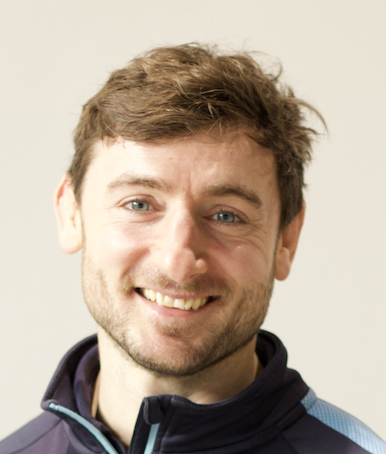 Ben DuckettCo-Founder & practising CEP
“Exercise and nutritional interventions aren't one of the first treatments prescribed for lifestyle-related conditions. Exercise specialists like CEPs get left out of the multi-disciplinary teams that shape patient care, and outcomes suffer for it.”
 Reilly SmithCo-Founder & practising CEP
 OncoMove CIC
 Coyne Medical

Refer yourself, or refer a patient
No referral needed to start. Tell us about you (or your patient), and we’ll match you with the right specialist.
Request a match