
Cancer and Exercise
Why is exercise during cancer treatment helpful?
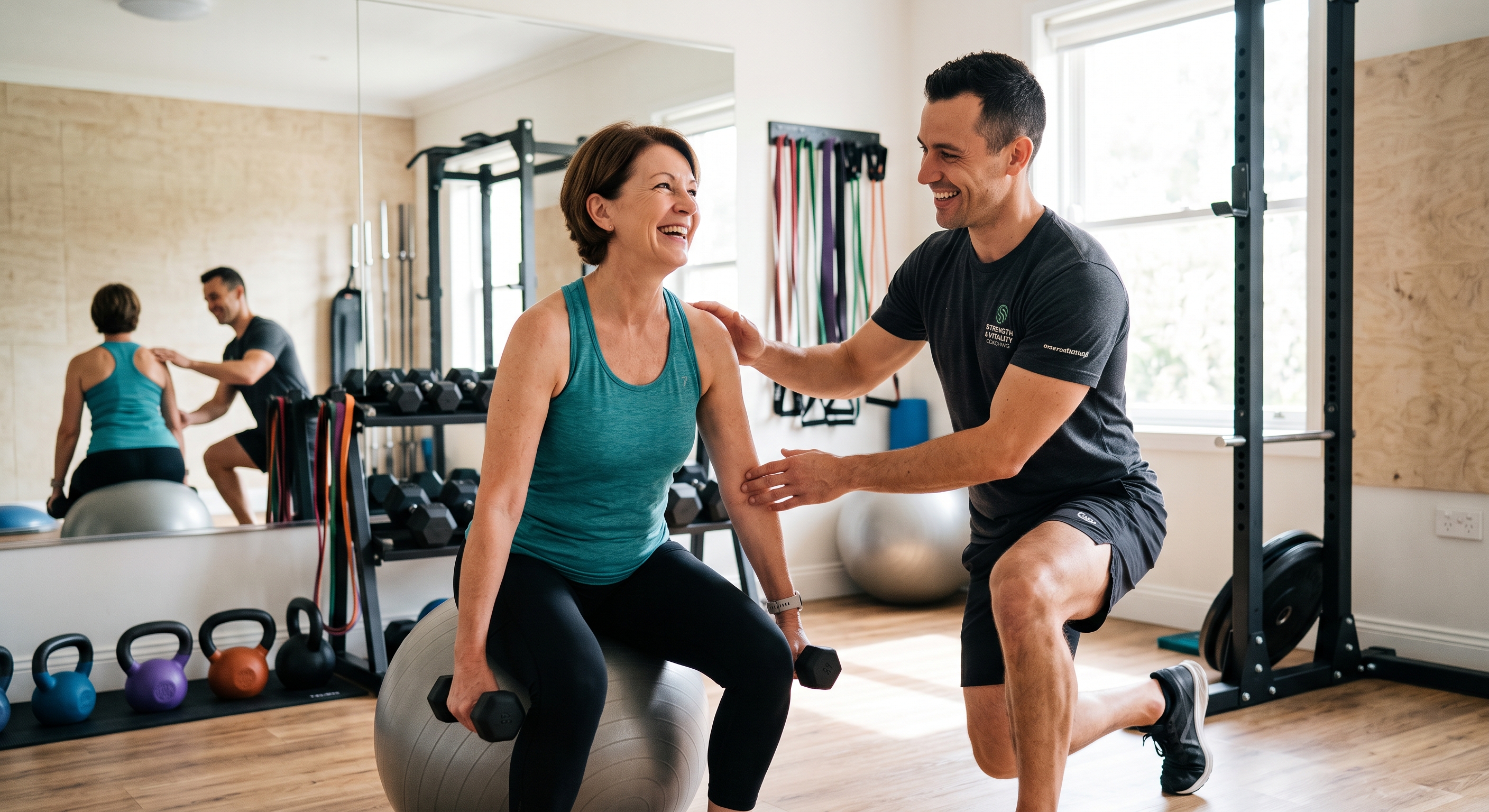
Somewhere between the diagnosis and the first cycle of treatment, someone may have mentioned that exercise would be beneficial.
Maybe you saw a leaflet in a waiting room, a post on social media, heard Sir Chris Hoy talk about it, or a nurse said something to you in passing. It’s great that more information is getting into the mainstream, but it can be difficult to know where to start. In this article, I will try to answer those questions; however, I can not tailor this information to any one person; your exercise programme needs to be built around you, your diagnosis, and your treatment.
Why you've probably been told to rest For a long time, that was the advice. Rest was standard guidance for unwell patients, and there are health conditions where exercise isn't recommended. In cancer care specifically, there were good-faith clinical reasons for caution. For example in 2019 international consensus statement on exercise for people with cancer notes that there is "a history of clinical recommendations to refrain from aerobic or resistance training" after cancer surgery; this was out of concern about triggering or worsening lymphoedema.
Trials through the 2000s and 2010s progressively showed that supervised, gradually progressed resistance training doesn't increase lymphoedema risk, and by 2019 the international consensus had shifted to recommend exercise rather than avoid it. Understandably, guidance took time to catch up.
If your oncologist, your cancer or surgeon hasn’t raised exercise with you yet it’s probably less likely to be about outdated data and more likely to be about time: oncology appointments run to fifteen or twenty minutes and are full of decisions, and in most parts of the UK there's no clear, obvious place to refer you to even when a clinician wants to. I always advise patients it's worth asking your team directly.
Cancer-related fatigue isn't ordinary tiredness The clinical definition of Cancer-related fatigue by The National Comprehensive Cancer Network is a distressing, persistent sense of physical, emotional, or cognitive exhaustion related to cancer or its treatment that is 'not proportional to recent activity' and interferes with normal functioning. Unlike ordinary tiredness, which is relieved by rest, cancer-related fatigue is not.
Ordinary tiredness typically follows a pattern: you did something, you feel it, you rest, it lifts within a few hours, or the next day. Macmillan says: people with cancer may get tired more quickly after less activity, and feel exhausted "even if they are getting enough rest and sleep."
This explains something that a lot of people experience during treatment. You rest more, do less, and you feel no better, and often somewhat worse. That is because doing less makes you deconditioned, and being deconditioned makes ordinary tasks harder, which makes you rest more, and it becomes a vicious cycle.
What exercise actually does during treatment The 2019 international roundtable reviewed the research outcome by outcome and only issued recommendations where the evidence was strong enough to justify a recommendation. In 2022, the American Society of Clinical Oncology reviewed the trials again, this time only in people receiving active treatment, and recommended that oncology providers advise both aerobic and resistance exercise during treatment given with curative intent, to reduce the side effects of therapy.
Energy and fatigue: This is the strongest-evidenced benefit. Moderate-intensity aerobic exercise, done consistently over a period of weeks, significantly reduces cancer-related fatigue both during and after treatment. And in the largest comparison of the available options, a meta-analysis of 113 trials and more than 11,500 people, exercise and psychological support both improved fatigue, while drug treatments did not. The authors' conclusion was that clinicians should be prescribing exercise or psychological support as first-line treatment for it.
Holding onto strength and physical function: Muscle is lost during cancer treatment, which is well documented across chemotherapy studies. This has a direct effect on your activities of daily living such as getting up stairs, carrying shopping bags, and getting out of a low chair. Aerobic training, resistance training, or the two combined, done around three times a week over 8 to 12 weeks, significantly improved people's physical function in the trials reviewed.
Mood and anxiety: Both anxiety and depressive symptoms improved with regular moderate-intensity aerobic exercise, or with aerobic and resistance training combined, during and after treatment. Notably, the improvements were greater in supervised programmes than in ones people did entirely alone.
Sleep: Some trials suggest regular moderate aerobic activity, walking included, improves overall sleep quality. But this is one of the outcomes the 2019 roundtable couldn't yet issue a formal exercise prescription for; the evidence points in a positive direction without being strong enough to state as settled.
Quality of life: Combined aerobic and resistance exercise improved health-related quality of life during and after treatment, and the combination worked better than either on its own. This is the closest the research comes to measuring the thing people actually want back: feeling like a functioning version of themselves while treatment goes on around them.
What it doesn't do Exercise is not a cancer treatment; it doesn't directly shrink tumours; it isn't an alternative to anything your oncology team has recommended, and nothing here should displace a single element of your treatment plan.
It has also not been proven to help you tolerate or complete your chemotherapy, but this is the one area where the research is shifting. When the 2019 roundtable assessed it, the evidence was judged insufficient to issue a formal recommendation, and that's still the official position. Since then, individual trials have been more encouraging than the earlier evidence base: a 2024 randomised trial found meaningfully better treatment response in women who did structured exercise and nutrition support alongside neoadjuvant chemotherapy, and an earlier landmark trial found less nausea and vomiting, and better-maintained fitness, in the exercise groups. However, no guideline body has yet updated its recommendation on the strength of this newer evidence, so although it is positive, it's not conclusive.
The picture is thinner for chemotherapy-induced nerve pain and numbness, and for the memory and concentration problems commonly known as chemo brain. Even after several hundred new trials published since 2019, both remain in the "insufficient evidence" category, without the same encouraging individual results that tolerance and completion now have.
And most of the research so far, across all of these outcomes, has been done in early-stage breast and prostate cancer. If you are living with advanced or metastatic disease, the honest position is that far less is known, and your programme should be built with that uncertainty respected rather than glossed over.
But I feel awful — how could I possibly exercise? Nothing in the evidence-based literature has been undertaken with patients who feel at their best. These trials were run in people going through chemotherapy and radiotherapy, people having bad weeks, low blood counts, and days where getting dressed is the achievement.
What that requires is a programme that is built around you, that adapts with you. The 2019 guidance is explicit that a clinician should watch for early signs that training isn't being tolerated and adjust the dose accordingly, "even if this means dropping below recommended training volumes." The guideline expects the plan to bend around the person.
Macmillan's guidance is a good practical test of intensity. At the end of an activity, you should feel energised, not exhausted. Little and often is more manageable than one big effort. And "doing something like stretching or a short walk is better than doing nothing at all." You might find your sessions vary day to day, or that you have a specific time of the day or day of the week when energy is higher. Some sessions might be longer and other a 5 min walk; both are important.
Is it safe during chemotherapy, radiotherapy or after surgery? Broadly, yes, and that is the position of the international guidelines, which conclude that exercise training is generally safe for people with cancer, and that everyone should "avoid inactivity." Cancer Research UK states: international guidelines say it is safe to be active during cancer treatment and afterwards.
Safety comes from screening, not avoidance. The international guidance sets out a straightforward triage:
- If you have no other significant health problems, no special assessment is needed before starting gentle activity.
- If you have peripheral neuropathy, joint or musculoskeletal problems, reduced bone density or lymphoedema, a medical assessment first is recommended, and the programme should be modified around it.
- If you have had lung or abdominal surgery, have a stoma, heart or lung disease, balance problems, severe fatigue, significant nutritional problems or bone metastases, you should be assessed and cleared by a doctor first, and your programme should be delivered by someone appropriately trained, for example a Clinical Exercise Physiologist.
Guidance across Macmillan, Cancer Research UK and NHS cancer services agrees on one thing: talk to your healthcare team before you start. There may be specific things to avoid at particular points in your treatment, after surgery, around low blood counts, or where cancer affects the bone.
What "exercise" actually means here It doesn't mean a gym, or a class full of people half your age; it doesn't mean a set duration or intensity, and it doesn't mean picking up a new or old sport. This isn’t the time to set big goals.
In the research, "moderate intensity" means working hard enough that your breathing has picked up and you could talk but not sing. Walking qualifies, so does a stationary bike. Resistance training means loading your muscles in a controlled way, which for many people starts with bodyweight or a resistance band rather than being in a gym.
Macmillan makes the point that a lot of ordinary life counts: walking around the house, gardening, playing with your grandchildren, doing the housework. Starting gently and building up is the method.
Who should be guiding it Someone who knows both exercise and cancer. The international guidance is specific about this. Where a person needs modification or medical clearance, it names rehabilitation professionals: physiatrists, physical therapists, clinical exercise physiologists, nurses, occupational therapists, and certified clinical exercise physiologists as the people to refer to. Across anxiety, depression, physical function and quality of life, supervised programmes consistently produced greater improvements than unsupervised ones.
In the UK, a Clinical Exercise Physiologist is a professional trained to prescribe exercise as clinical treatment for people with complex conditions; they can understand your treatment plan, screen for the things above, and build a programme around your chemotherapy cycles.
How to raise it with your oncology team If no one has mentioned it to you yet, I would recommend bringing it up yourself. International guidance actually asks oncology clinicians to assess, advise, and refer on physical activity; it acknowledges that they aren't expected to write the exercise prescription themselves.
Questions worth taking to your next appointment:
- "Is there any reason I shouldn't be exercising at this point in my treatment?"
- "Are there specific movements or activities I should avoid because of my surgery, my bloods, or where the cancer is?"
- "Are there points in my cycle when I should ease off?"
- "Is there an exercise or prehab service I can be referred to locally?"
- "If there isn't one, is there any reason I shouldn't work with a Clinical Exercise Physiologist privately?"
Your Clinical Exercise Physiologist will know this and guide you through what you are able to do at different stages of your treatment plan.
Provision across the UK is uneven: well-resourced services like Prehab4Cancer exist in some regions, but most trusts have no equivalent to refer into. That gap is the reason this page exists.
Ready to talk to someone? Tell us about your diagnosis, where you are in treatment, and where you're based. We'll match you with a Clinical Exercise Physiologist who specialises in cancer, is AHCS-registered, and is verified by our team.
This article is general information and is not a substitute for advice from your oncology team. Always speak to them before starting or changing physical activity during cancer treatment.
Sources
- Campbell KL, Winters-Stone KM, Wiskemann J, et al. Exercise Guidelines for Cancer Survivors: Consensus Statement from International Multidisciplinary Roundtable. Med Sci Sports Exerc. 2019;51(11):2375–2390. https://journals.lww.com/acsm-msse/fulltext/2019/11000/exercise_guidelines_for_cancer_survivors_.23.aspx
- Ligibel JA, Bohlke K, May AM, et al. Exercise, Diet, and Weight Management During Cancer Treatment: ASCO Guideline. J Clin Oncol. 2022;40(22):2491–2507. https://pubmed.ncbi.nlm.nih.gov/35576506/
- Mustian KM, Alfano CM, Heckler C, et al. Comparison of Pharmaceutical, Psychological, and Exercise Treatments for Cancer-Related Fatigue: A Meta-analysis. JAMA Oncol.
- Systematic review on chemo completion rate. Bland KA, Zadravec K, Landry T, Weller S, Meyers L, Campbell KL. Impact of exercise on chemotherapy completion rate: A systematic review of the evidence and recommendations for future exercise oncology research. Crit Rev Oncol Hematol. 2019;136:79–85.
- LEANer trial (2024). Ligibel JA, et al. Randomized Trial of Exercise and Nutrition on Chemotherapy Completion and Pathologic Complete Response in Women With Breast Cancer: The Lifestyle, Exercise, and Nutrition Early After Diagnosis Study. J Clin Oncol. 2024. DOI: 10.1200/JCO.23.00871
- PACES trial (2015). van Waart H, Stuiver MM, van Harten WH, Geleijn E, Kieffer JM, Buffart LM, et al. Effect of Low-Intensity Physical Activity and Moderate- to High-Intensity Physical Exercise During Adjuvant Chemotherapy on Physical Fitness, Fatigue, and Chemotherapy Completion Rates: Results of the PACES Randomized Clinical Trial. J Clin Oncol. 2015;33(17):1918–1927. DOI: 10.1200/JCO.2014.59.1081 7.2023 update review. Sturgeon KM, Kok DE, Kleckner IR, Guertin KA, McNeil J, Parry TL, Ehlers DK, Hamilton A, Schmitz K, Campbell KL, Winters-Stone K. Updated systematic review of the effects of exercise on understudied health outcomes in cancer survivors. Cancer Med. 2023;12(24):22278–22292. DOI: 10.1002/cam4.6753
- Fisher MI, Cohn JC, Harrington SE, et al. Screening and Assessment of Cancer-Related Fatigue: A Clinical Practice Guideline for Health Care Providers. Phys Ther. 2022;102(9):pzac120. https://pmc.ncbi.nlm.nih.gov/articles/PMC9525018/
- Schmitz KH, Campbell AM, Stuiver MM, et al. Exercise is medicine in oncology: Engaging clinicians to help patients move through cancer. CA Cancer J Clin. 2019;69(6):468–484. https://acsjournals.onlinelibrary.wiley.com/doi/10.3322/caac.21579
- Macmillan Cancer Support. Tiredness (fatigue) and cancer. https://www.macmillan.org.uk/cancer-information-and-support/impacts-of-cancer/tiredness
- Macmillan Cancer Support. Being active during cancer treatment. https://www.macmillan.org.uk/cancer-information-and-support/treatment/preparing-for-treatment/physical-activity-and-cancer/during-treatment
- Macmillan Cancer Support. FAQs about physical activity and cancer. https://www.macmillan.org.uk/cancer-information-and-support/treatment/preparing-for-treatment/physical-activity-and-cancer/faqs
- Cancer Research UK. Physical activity guidelines for people with cancer. https://www.cancerresearchuk.org/about-cancer/coping/physically/exercise-guidelines
- Sarcopenia and loss of muscle mass in patients with lung cancer undergoing chemotherapy treatment: a systematic review and meta-analysis. Acta Oncologica.2023. https://www.tandfonline.com/doi/full/10.1080/0284186X.2023.2180660
- Prehab4Cancer, Greater Manchester. https://prehab4cancer.co.uk/